



VTC7260-x Fanless AI-Aided Vehicle Computer
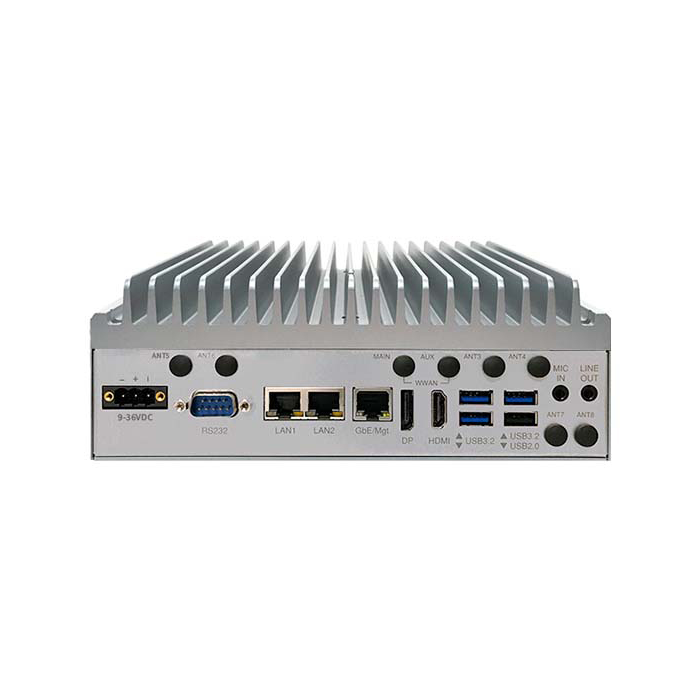
Fanless AI-aided Vehicle Computer with Intel Core 11th Gen CPU
Key Features:
- Intel 11th Gen Tiger Lake UP3, cost-efficient performance
- Compact, rugged and fanless design
- Rich I/Os, 2 x 2.5GbE, GbE, 4 x USB 3.2/2.0 & 3 x RS232/422/485
- 1 x 2.5” SSD, 1 x mSATA and 1 x NVMe SSD for data integrity
- Up to 3 combinations of LTE/5G, and Wi-Fi 5/6 for mobile router function
- Triple display, VGA, HDMI and DP for multi video-out
- 9~36V DC-IN with ignition control & OCP/OVP
- Wide range operating temperature of -30°C~65°C (15W TDP)
- Military standard of anti-vibration/shock for OHV applications
- CE/FCC, UKCA, Emark Certified
In stock
- SKU
- VTC7260-x
Have a Question about this product?
Description / VTC7260-x Fanless AI-Aided Vehicle Computer
The VTC7260-x is an in-vehicle AI-aided telematics computer built with Intel's 11th generation Tiger Lake UP3, which has 25% more computing capacity than the previous generation. Additionally, its strategy of a 10-year product life-cycle can provide long-term support appropriate for any in-vehicle applications. With its small, tough, and fanless design, the VTC 7260-x can be easily installed in any cabinet with limited room, reducing maintenance requirements while providing round-the-clock services. The VTC 7260-x is a complex in-vehicle computer that also includes a variety of peripherals, such as 2.5GbE, USB 3.2, isolation CANBus, serial ports, ultra-speed NVMe storage, triple displays, audio in/out, DI/DO, and 936VDC with IGN control.
The user can install Hailo AI accelerator (26TOPS) and LTE/5G/Wi-Fi 5/6 modules to operate as the edge AI and implement cloud SaaS-based AI services. Given its use in harsh environments, the VTC 7260-x complies with MIL-STD-810G's anti-vibration and shock requirements and can work in a temperature range of -30°C to 65°C (15W TDP). VTC 7260-x complies with the law's requirements for CE/FCC Class A, UKCA, and EMARK. (E13).
Key Features:
- Intel 11th Gen Tiger Lake UP3, cost-efficient performance
- Compact, rugged and fanless design
- Rich I/Os, 2 x 2.5GbE, GbE, 4 x USB 3.2/2.0 & 3 x RS232/422/485
- 1 x 2.5” SSD, 1 x mSATA and 1 x NVMe SSD for data integrity
- Up to 3 combinations of LTE/5G, and Wi-Fi 5/6 for mobile router function
- Triple display, VGA, HDMI and DP for multi video-out
- 9~36V DC-IN with ignition control & OCP/OVP
- Wide range operating temperature of -30°C~65°C (15W TDP)
- Military standard of anti-vibration/shock for OHV applications
- CE/FCC, UKCA, Emark Certified
More Information
| Brand | Nexcom | ||||||||||||||||||||||||||||||||||||||||||||||||||
|---|---|---|---|---|---|---|---|---|---|---|---|---|---|---|---|---|---|---|---|---|---|---|---|---|---|---|---|---|---|---|---|---|---|---|---|---|---|---|---|---|---|---|---|---|---|---|---|---|---|---|---|
| Specifications |
|
||||||||||||||||||||||||||||||||||||||||||||||||||
| Description | The VTC7260-x is an in-vehicle AI-aided telematics computer built with Intel's 11th generation Tiger Lake UP3, which has 25% more computing capacity than the previous generation. Additionally, its strategy of a 10-year product life-cycle can provide long-term support appropriate for any in-vehicle applications. With its small, tough, and fanless design, the VTC 7260-x can be easily installed in any cabinet with limited room, reducing maintenance requirements while providing round-the-clock services. The VTC 7260-x is a complex in-vehicle computer that also includes a variety of peripherals, such as 2.5GbE, USB 3.2, isolation CANBus, serial ports, ultra-speed NVMe storage, triple displays, audio in/out, DI/DO, and 936VDC with IGN control. The user can install Hailo AI accelerator (26TOPS) and LTE/5G/Wi-Fi 5/6 modules to operate as the edge AI and implement cloud SaaS-based AI services. Given its use in harsh environments, the VTC 7260-x complies with MIL-STD-810G's anti-vibration and shock requirements and can work in a temperature range of -30°C to 65°C (15W TDP). VTC 7260-x complies with the law's requirements for CE/FCC Class A, UKCA, and EMARK. (E13). Key Features:
|
